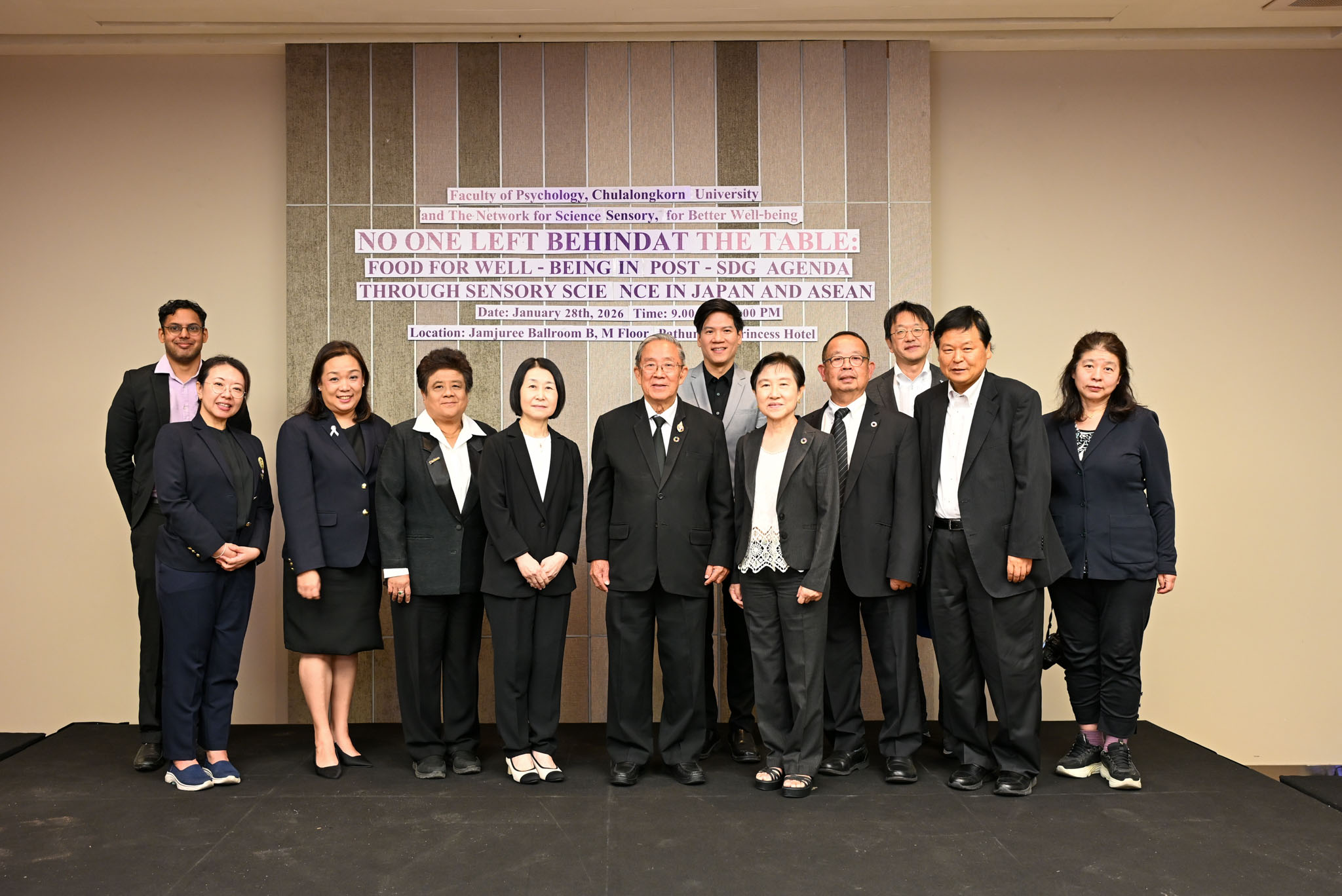

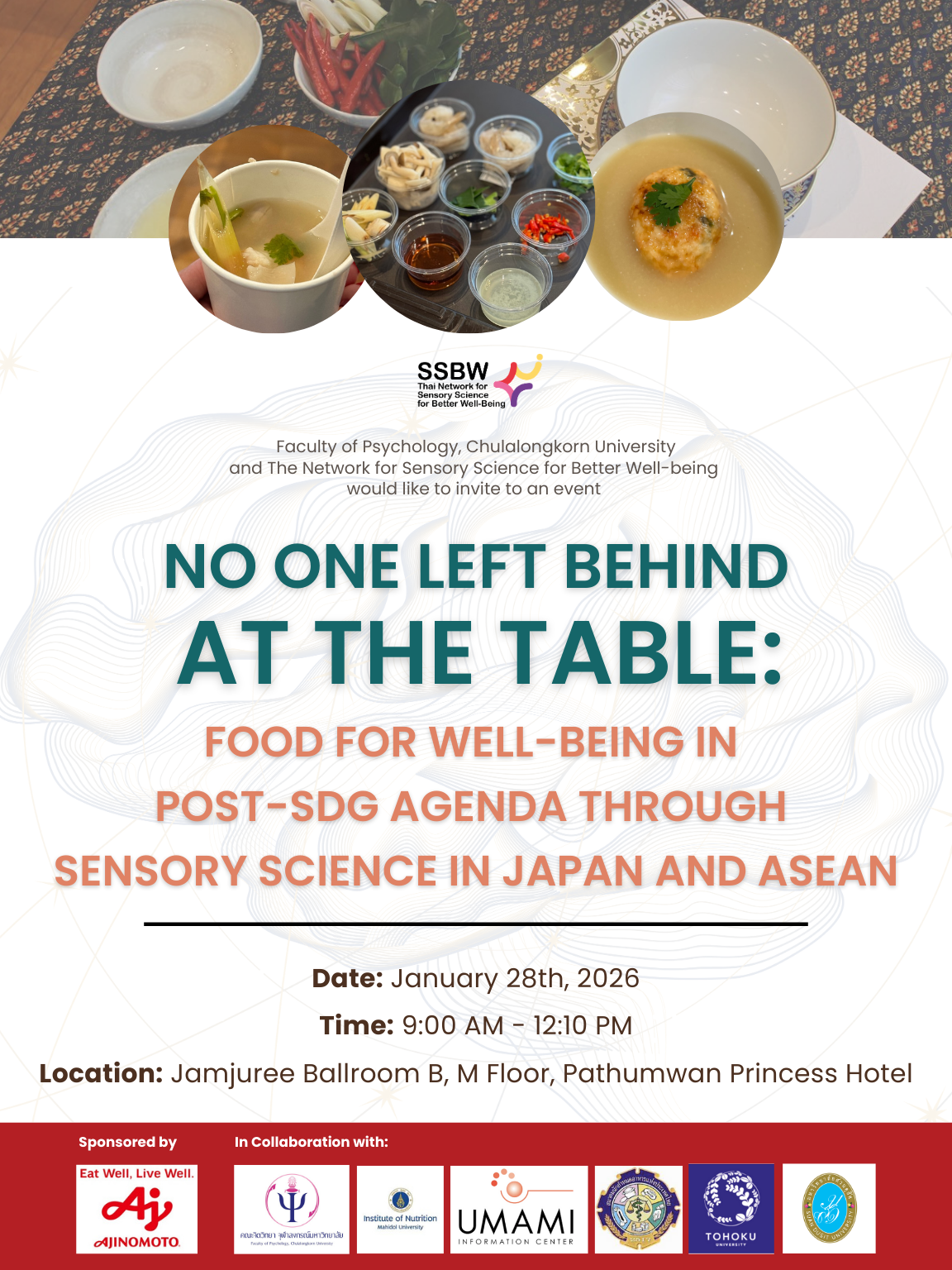
No One Left Behind at the Table: Food for Well-being in Post-SDG Agenda through Sensory Science in Japan and ASEAN
28 January 2025
9:00 a.m. – 12:30 p.m. (GMT+7)
Format: Hybrid (On-site in Bangkok)
📍 Jamjuree Ballroom Hall, M Floor, Pathumwan Princess Hotel map
Host:
SSBW, Thailand
Co-host:
Chulalongkorn University (Thai), Mahidol University (Thai), Tohoku University & Umami Information Center (JPN)
Abstract:
As the world enters the Post-SDG era, demographic transitions are reshaping societies in unprecedented ways. Rapid population aging, the growing youth bulge in specific regions, urbanization, and migration are intensifying pressures on social protection systems, while exposing persistent inequities among vulnerable groups such as older adults, informal workers, migrants, women, and ethnic minorities. Addressing these challenges requires holistic approaches that transcend conventional health and nutrition frameworks.
Food, beyond its nutritional and biomedical dimensions, is a profound source of physical, mental, and social well-being. It is at once a necessity, a joy, and a symbol—capable of strengthening social bonds through commensality, nurturing intergenerational solidarity, and fostering inclusive identities. Yet, food has also historically embodied divides—across class, gender, and culture—that risk reinforcing inequity. To realize the vision of “no one left behind,” food must be repositioned as a pillar of equity, solidarity, and happiness in the Post-SDG agenda.
This symposium will present the Sensory Science for Better Well-being Platform, a Japan–ASEAN collaboration that integrates research, community practice, and policy innovation. Drawing on advances in sensory science, the platform explores how taste, smell, and food experiences can enhance quality of life, particularly for vulnerable groups such as older adults experiencing sensory decline, or migrant populations seeking cultural belonging.
The session will highlight three contributions:
- Family and Community Roles (PS1.3): Evidence on how commensality and culturally embedded food practices reinforce caregiving networks and intergenerational trust in aging societies.
- Intergenerational Solidarity (PS1.4): Practical models from Japan and ASEAN demonstrating how shared meals bridge generational divides, reduce loneliness, and foster mutual responsibility across age groups.
- Inclusive Policies for Vulnerable Populations (PS1.5): Policy pathways to ensure equitable access to food environments that support physical and mental well-being, regardless of socioeconomic status, gender, or cultural identity.
By linking Japan’s super-aged society and ASEAN’s youthful, culturally diverse populations, this initiative offers a unique comparative framework to rethink equity in demographic transitions. Through multi-stakeholder collaboration—including academia, civil society, the private sector, and governments—we propose Food for Well-being as an actionable, cross-cutting priority for sustainable, inclusive development.
In positioning food as both a human necessity and a universal symbol of belonging, this symposium seeks to reimagine the Post-SDG agenda: one in which well-being is not only measured by health and longevity, but also by joy, solidarity, and dignity shared at the table.